Epilepsy Treatment & Care
Make an Appointment
Experiencing a seizure is disorienting and alarming. If you've had two or more seizures, you may have epilepsy. At UVA Health, you'll find specialists who can diagnose and treat this condition. Treatment can reduce risk of seizures and improve quality of life.
Epilepsy Treatment at UVA Health
UVA Health is recognized around the world for excellence in epilepsy care.
We use advanced technology to decode the brain signals that cause seizures. Our team combines this knowledge with the latest research. Then we create a personalized treatment plan to help you regain control.
Our program is a Level 4 Epilepsy Center, as named by the National Association of Epilepsy Centers. This is the highest level of accreditation. We provide advanced testing, treatment, and care for all types of epilepsy.
Types of Epilepsy We Treat
- Childhood absence epilepsy
- Developmental malformations
- Drug-resistant epilepsy
- Frontal lobe epilepsy
- Genetic (idiopathic) generalized epilepsies
- Hypothalamic hamartomas
- Infantile spasms
- Juvenile absence epilepsy
- Juvenile myoclonic epilepsy
- Lennox-Gastaut syndrome
- Myoclonic epilepsy
- Self-limited epilepsy with centrotemporal spikes (SeLECTS)
- Temporal lobe epilepsy
- Tuberous sclerosis
Our Comprehensive Epilepsy Program Includes:
- Specialty board-certified epileptologists
- Medication management
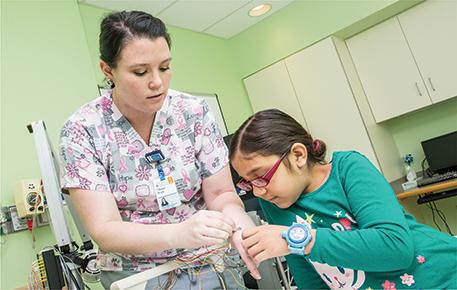
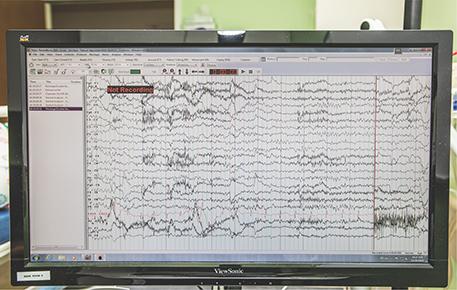
- Video-EEG monitoring
- Neuropsychological evaluation and consultation
- Psychological evaluation and treatment
- Social services
- Rehabilitation, physical and occupational therapy
- Ketogenic diet and nutritional guidance
- Comprehensive presurgical evaluation including advanced brain imaging
- Intracranial EEG monitoring
Why Choose UVA Health?
Nathan Fountain, MD, explains why he treats epilepsy at UVA Health.
[MUSIC PLAYING] NATHAN FOUNTAIN: We are one of the first comprehensive epilepsy programs. We have a long history to build upon. 40 years ago, comprehensive meant having access to nurses with special training to dietitians to physical therapy. Now comprehensive's really shifted its focus and what it means is having available every diagnostic test that is available to anyone else and also having all treatment modalities available. That means all kinds of treatment.
Epilepsy is a difficult condition to have, because it does cause seizures. So job one in the treatment of epilepsy is to suppress seizures, typically through medications or other kinds of treatments and that's really what people are after. No seizures, no side effects. For patients who have seizures that aren't controlled with medications, then we often consider devices.
There's one that can be placed in the neck called Vagus Nerve Stimulation, one that can now be placed in the skull that's a small computer that monitors brain wave activity and can provide a little electrical stimulus to the place where the seizures are coming from. And for people who are appropriate candidates, meaning having seizures from one small spot in the brain we can safely remove, then epilepsy surgery is really gratifying, because then it provides the one opportunity really for a cure for epilepsy.
[MUSIC PLAYING]
Epilepsy Care: Diet, Therapies, & More
Our program includes:
- Evaluation
- Video-EEG monitoring
- Neuropsychological evaluation and consultation
- Psychological evaluation and social services
- Rehabilitation, physical and occupational therapy
- Ketogenic diet and nutritional guidance
- Medication management
- Surgical evaluation
Do You Have Focal Seizures?
A focal seizure starts in one specific area of the brain, rather than affecting both sides of the brain at once. You may also hear these called partial seizures, which is an older term for the same thing.
What Happens During a Focal Seizure
Different parts of the brain control different functions. The part of your brain experiencing a seizure influences the symptoms you experience. Focal seizures can feel and look very different from person to person.
Some common focal seizure symptoms include:
- Sensations like a rising feeling in your stomach
- Experiencing déjà vu
- Sudden emotions like panic or joy
- Strange tasts or smells
- Jerking of limbs or face
- Tingling sensations on one side
- Visual changes
- Unusual repetitive movements
- Difficulty speaking
Many times, a person having a focal seizure will seem to zone out or lose awareness of their surroundings. Such seizures may go unrecognized but may impact a person’s life. It is important to get a diagnosis and a treatment plan as soon as possible.
Treating Medication-Resistant Epilepsy
If anti-seizure medicines don't work well enough for your epilepsy, you may have intractable epilepsy. We offer several treatments for this kind of epilepsy, including:
- Surgery, including Gamma Knife
- Vagus nerve stimulation
- Deep brain stimulation
- Responsive neurostimulation
- Laser ablation
- Other medications
- Pediatric EpilepsyGet Treatment for Your Child
As a designated Level 4 epilepsy center, we provide exceptional pediatric epilepsy care, such as inpatient monitoring to diet counseling. Our pediatric experts have the training and expertise to treat our youngest patients, from infancy to adolescence.
- ResearchLearn About Clinical Trials
At UVA, we're committed to advancing both our understanding of the causes and effects of epilepsy and seizure disorders, and to investigating new treatments for these conditions, such as focused ultrasound and gamma knife. Pushing the boundaries of current medicine ensures a better future for our youngest patients.
- Refer a PatientRefer Your Epilepsy Patient to UVA
If your patient is in need of the advanced epilepsy monitoring and care we can provide, our referral specialists are available 24 hours a day, 7 days a week, by phone and online, to help you get your patient the care they need.