Brain Metastases
Make an Appointment
You’ve been through a long battle with cancer before it moved to your brain (called brain metastases). Or you had a seizure and found out you have a cancer that spread to the brain. You may have symptoms like headaches, seizures, memory issues, weakness, and vision problems.
You have lots of questions: what treatments are there? Who should I see for my cancer?
Treating brain metastases is different from treating other types of cancer. For example, many chemotherapy drugs don't work for brain cancer. That's because they can't cross the blood-brain barrier. This filter stops medicines from reaching your brain.
At UVA Health, we have a team of experts experienced in treating brain metastases. Here you’ll find high-quality, compassionate care and the latest treatments.
Our program is part of UVA Cancer Center, Virginia’s first National Cancer Institute-designated Comprehensive Cancer Center.
What Are Brain Metastases?
Brain metastases (also called metastatic brain tumors or secondary brain tumors) happen when cancer from another part of the body spreads to the brain. They're different from primary brain tumors, which start in the brain itself. Brain metastases are actually the most common brain cancer in adults.
Brain metastases most often come from:
Symptoms of Brain Metastases
Brain metastases can cause neurological symptoms when tumors put pressure on the brain or irritate surrounding tissue. Symptoms depend on:
- Where the tumors are located
- How large they are
- How many are present
Common symptoms include:
- Headaches, especially new headaches or ones that are worse in the morning or when you move
- Nausea or vomiting, often worse in the morning and sometimes occurring with headaches
- Memory problems, confusion, or difficulty concentrating
- Weakness in the arms or legs, on one or both sides of the body
- Difficulty speaking, such as slurred speech or trouble finding words
- Personality changes, including mood swings, irritability, or low mood
- Vision changes, like blurred vision or partial vision loss
- Seizures, which may involve muscle jerking, tingling sensations, or staring spells
Sometimes, symptoms can come on suddenly — similar to a stroke — if bleeding develops within a tumor.
Not everyone with brain metastases has symptoms. In some cases, tumors are found during imaging.
How Brain Metastases Are Diagnosed
Brain metastases are diagnosed with:
- A neurological exam
- Imaging
- Biopsy
Brain Metastases Prognosis
A person's life expectancy with brain metastases can vary widely from person to person. It depends on many factors, such as your primary cancer, tumor type, age, and how well you're functioning.
Living Well Despite Brain Metastases
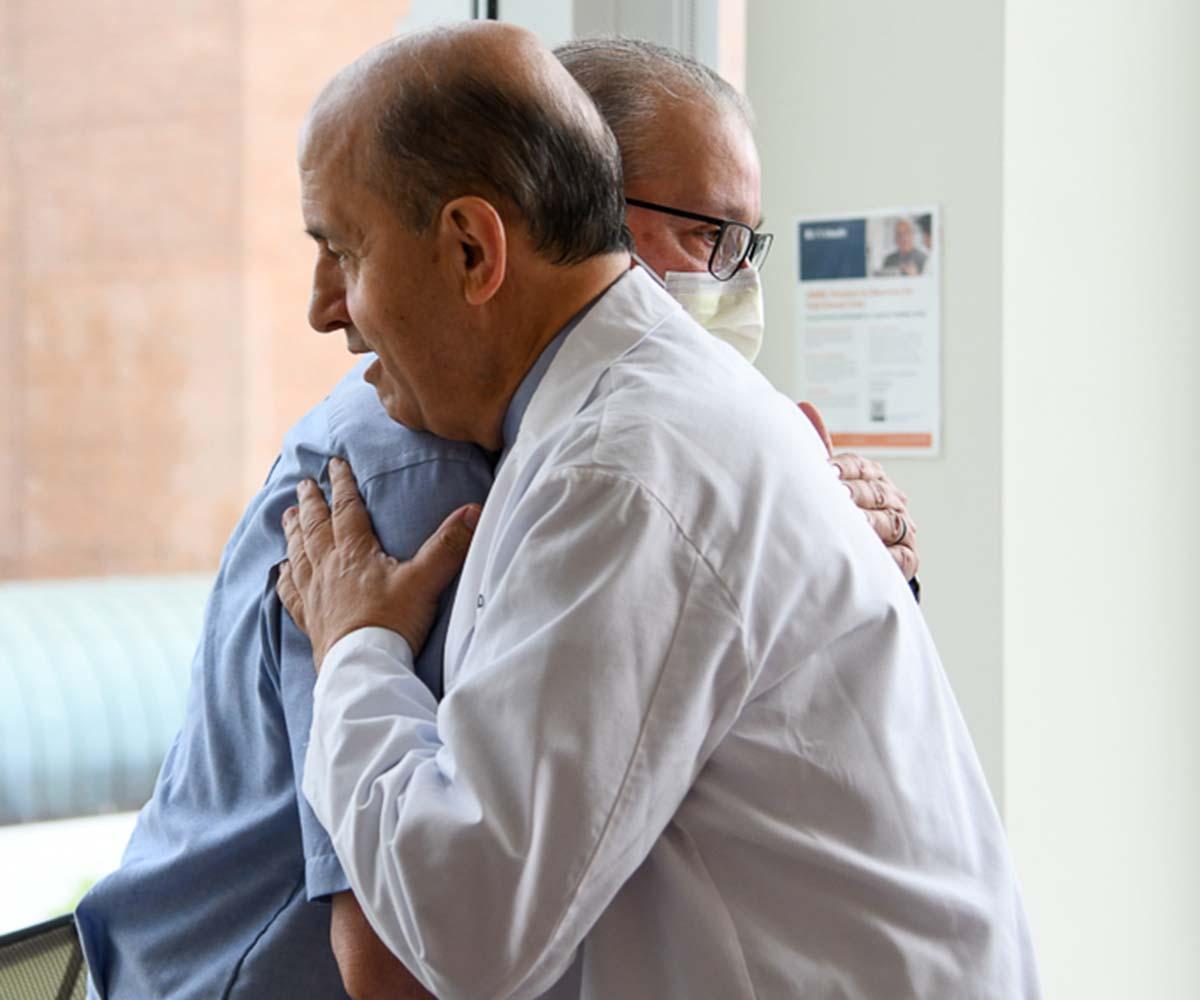
David Lunt had stage 4 lung cancer and more than 30 brain lesions. The UVA Health brain metastases team recommended a targeted treatment that put his cancer in retreat. Now he's back to his normal life.
Read David's StoryPersonalizing Your Care
Determining the right treatment for someone with brain metastases can be very difficult. It can include decisions about extending life and making sure you have good quality of life. We understand these decisions are very personal. We want to help you find the right treatment for you.
Some treatments can help you live longer, but won’t help you have good quality of life during that extra time. And some treatments, like whole-brain radiation therapy, relieve symptoms. But then the treatment causes neurological problems.
Our doctors have studied brain metastases treatments for decades. They’ve published treatment guidelines now used by other centers across the country.
We'll help you choose treatments that give you the most time with the highest quality of life.
A Team of Brain Metastases Experts
Your team will include brain cancer specialists and cancer doctors. Our specialists also include neurosurgeons, radiation oncologists, and neuropsychologists. Our palliative care providers help with pain relief. And we have social workers and chaplains to support you.
Our team also includes a nurse navigator. This gives you one point person to ask when you have questions for the team. They'll also coordinate your care among all our specialists.
Fast, One-Stop Access to Care
When we get your referral, our goal is to see you within 1 week. We’ll coordinate all the specialists you need to see. That way, you won't have to make separate appointments with these experts on your own. We’ll address all your concerns, including treatment, pain control, and support.
Within days after your first appointment, our whole team meets to talk about your case. You'll benefit from each team member's unique expertise. We'll make sure you get every treatment and support service that can help you.
Working Together With You & Your Caregivers
We believe in working together with you to decide the best treatment. We’ll start by getting to know you and your caregivers. We'll talk about your individual needs and goals so we can help you determine the best treatment.
Brain Metastases Care at UVA Health
Learn about treatments and what to expect from our experts.
Dr Sheehan:
Brain metastases are tumors that form in the brain from cancer that resides outside of the brain. Typically brain metastases can arise from lung cancer, melanoma, renal cell cancer, unusual types of cancers such as gynecological cancers or prostate cancer. When these cancer cells go into the brain, they can form small growths within the brain tissue itself or they can spread on the surface of the brain.
Dr Fadul:
We have new treatments, we have more targeted treatments, we have new systemic medical therapies that are very helpful for patients with brain metastases.
Dr Sheehan:
Sometimes those treatment options are open brain operations and other times they're closed brain operations, most frequently something called stereotactic radiosurgery that we do routinely with the Gamma Knife device here.
Dr Fadul:
We can now treat brain metastases in some cases with specific drugs that are able to take care of the brain metastases without using radiation, without using surgery. There are so many disciplines that collaborate in the management of these patients. I have been very interested in trying to coordinate that care. We see the patients in the cancer center, neurosurgery comes to the cancer center, medical oncology is there, palliative care is there, so we see patients the same day under the same roof. That allows us to coordinate their care. A fundamental position within the brain metastases program of excellence is that of the nurse navigator. That nurse navigator allows the patient and their caregivers to navigate the system to be able to be sure that they are in the right place at the right time and they're getting the right treatments. We have a brain metastases clinic every Wednesday and at the end of that clinic we get together and discuss the patients that are difficult to make a decision with respect to treatment. We come together with a plan that is communicated to the patient.
Dr Sheehan:
We have specific trials open for brain metastases patients. I think that the team itself is a cohesive one that truly works well together and I believe that that carries forth to providing some of the best outcomes for patients and the best experience for the patients and their families.
Advanced Brain Metastases Treatment
We offer fast access to the latest tools and technologies to find and treat brain metastases. Surgery to remove brain tumors may help relieve symptoms. We also offer advanced nonsurgical options, like Gamma Knife radiosurgery and targeted medications. Additionally, our team includes experts in treating neurological disorders caused by brain metastases.
Medications
We offer different types of medications, including:
- Chemotherapies
- Targeted therapies
- Medicines for seizures and other symptoms
Gamma Knife Radiosurgery
Depending on the number and size of your tumors, we may be able to use Gamma Knife. This targeted delivery of radiation focuses solely on the brain tumors. It causes little impact to the healthy brain and few side effects.
Whole Brain Radiation Therapy
If your tumors are larger or your cancer has spread to more parts of the brain, we may use whole brain radiation therapy. We can give you medications to protect the healthy parts of your brain. When possible, we use a technique that reduces the risk of damaging important parts of the brain.
Laser Interstitial Thermal Therapy (LITT)
When we perform LITT, we use only a small cut (incision) and use heat from a laser to destroy your tumors. We use a robot and advanced imaging. This helps us target the tumor without hurting your healthy brain tissue.
We may use this surgery if:
- Your brain tumors go away and come back
- You have damaged brain tissue
- Open surgery would be too difficult in your case
Volumetric Modulated Arc Therapy (VMAT)
VMAT is an advanced type of radiation treatment used to target tumors. It delivers radiation in a smooth arc around the body while the machine changes the strength and shape of the beam.
This approach allows us to:
- Aim radiation more precisely at the tumor
- Reduce the amount of radiation reaching nearby healthy tissue
- Shorten treatment time compared with some older radiation techniques
Compared with traditional radiation therapy, VMAT can:
- Better focus high doses where they are needed
- Lower the chance of side effects to healthy organs and tissues
- Often be delivered in fewer treatment sessions
Traditional Surgery
Taking out the tumors can relieve pressure on your brain and lessen your symptoms. Our surgeons are experts in operating on this critical part of the body.
Physical, Occupational, & Speech Therapies
We offer speech, occupational, and physical therapy. These can help with neurological symptoms like headaches and balance problems.
At the Forefront of Clinical Trial Research
UVA Health works on the front lines of research to find new ways to treat brain cancer.
Through clinical trials, we bring you treatments you can’t find anywhere else. Our research improves and prolongs patients' lives. We’ll help you find clinical trials that can help you. See our clinical trials for cancer.