Living Liver Donation
Become a Living Liver Donor
Contact the Living Liver Team
The liver has a remarkable ability to regrow. That means a healthy person can donate a piece of their liver to someone who needs a transplant. Both the donor's remaining liver and the transplanted piece can grow after surgery.
Living liver donation can give someone with advanced liver disease another path to transplant without waiting for a liver from a deceased donor. At UVA Health, our dedicated living donor team puts your health, safety, and independence first throughout every step of the process.
Why Consider Living Liver Donation?
For someone with advanced liver disease, waiting for a deceased donor liver can take time. Their health could get worse while waiting for an organ to become available.
Living donor liver transplant may offer several benefits:
- Receiving a transplant sooner once the right donor is approved
- Planning surgery in advance
- Receiving a transplant before becoming critically ill
- Receiving a liver from a donor who has been carefully evaluated
- Outcomes comparable to those of deceased donor liver transplant
You don't have to be related to someone to donate a part of your liver. Living donors can be family members, friends, acquaintances, or people who choose to donate to someone they have never met.
Could I Become a Living Liver Donor?
Potential living liver donors generally must:
- Be between 18 and 60 years old
- Be in good physical and psychological health
- Be at a healthy weight
- Not have major medical conditions that make donation unsafe
- Not misuse alcohol or drugs
- Be willing to donate without pressure or expectation of payment
Every potential donor is evaluated individually. You don't need to know whether you qualify before reaching out. Our living donor team will help you understand the requirements and decide whether donation may be an option for you.
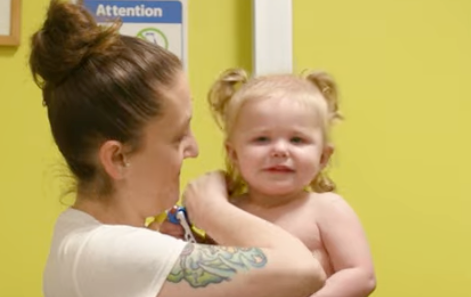
Living Liver Donation Saved Josie
Josie's biliary atresia meant she desperately needed a liver transplant. When Christina Miller heard about baby Josie's condition, the call for a living liver donation went straight to her heart.
See Josie and Christina's StoryHow Does Living Liver Donation Work?
During living donor liver transplant surgery, surgeons remove a portion of the donor's healthy liver. The recipient's diseased liver is removed and replaced with the donated portion.
After surgery, both portions of the liver begin to regrow. Most liver regrowth occurs during the months following transplant.
What to Expect During Living Liver Donor Evaluation
The evaluation process is designed first and foremost to protect you. It helps our team decide whether liver donation can be performed safely and gives you the information you need to decide whether donation is right for you.
Your evaluation may include:
- A review of your medical and family history
- Blood and laboratory testing
- Imaging of your liver and surrounding blood vessels
- Heart and other health testing when appropriate
- Age-appropriate health screenings
- A psychological and social evaluation
- Meetings with members of the living donor team
Your donor team focuses specifically on your health and well-being. You'll also have an independent living donor advocate who helps protect your rights and interests throughout the process.
Completing the evaluation does not commit you to becoming a donor.
Living Liver Donation Surgery
Living liver donation is a major surgery. Surgeons remove the portion of your liver needed for transplant while leaving enough healthy liver for your body to function and recover.
Your surgeon will explain the recommended surgical approach, potential risks, and what you can expect before you decide whether to go ahead. Donation will only move forward if the team decides that you can safely donate and you independently choose to do so.
Recovery After Living Liver Donation
Recovery is different for everyone. Living liver donors typically spend several days in the hospital after surgery and need several weeks to recover at home.
Many donors can expect a recovery period of approximately 6-10 weeks. Your recovery and return-to-work timeline depends on your specific condition.
Your living donor team will continue to monitor your health after donation and guide you as you return to your normal activities.
What Does Living Liver Donation Cost?
The recipient's insurance generally covers medical costs associated with your donor evaluation and donation surgery.
Other expenses, such as travel, lodging, childcare, or lost wages, may not automatically be covered. Financial assistance may be available to eligible donors, and our team can help you understand potential expenses and available resources before you make your decision.
Your Decision Is Always Yours
Becoming a living liver donor is completely voluntary. You can ask questions, take time to think about your decision, or stop the evaluation process at any point. Your personal medical information and reasons for deciding not to donate will remain confidential.
Our role is to protect your health and give you the information and support you need to make the decision that is right for you.
Thinking About Becoming a Living Liver Donor?
The first step is simply finding out.
Our living donor team can answer your questions, explain what to expect, and help determine whether living liver donation may be an option for you.