Pancreatic Cancer

surgeons at work

Pancreatic cancer is hard to treat. Once you have it, surgery is the only cure. But surgery only works for 10-15% of patients. That's why knowing your risk and getting care early is key. 

At UVA Health, you'll find a team on the front lines of care and research. We're experts at pancreatic cancer surgery. And we continue to explore ways to catch pancreatic cancer before it strikes.

Why Pancreatic Cancer Treatment at UVA Health

At UVA Health, we have among the highest quality outcomes in the nation. We perform the most advanced surgeries, including the Whipple procedure. Our team has gone through special training to treat diseases of the pancreas. This level of expertise means you get the highest level of care.

Our cancer care has been designated by the NCI as Virginia's first Comprehensive Cancer Center. That means you can trust personalized expertise. Our research and knowledge means we're advancing pancreatic cancer treatment. You can be part of that journey, too, through our clinical trials.

    Pancreatic Cancer Experts

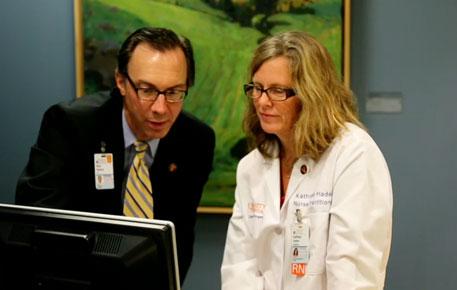
    The team includes surgeons, nurses, GI specialists, cancer experts, radiologists, and genetic counselors. All of us specialize in dealing with pancreatic cysts and tumors. We work together to give you a personalized experience. This combination of skill and collaboration means you get the best care possible.

    Types of Pancreas Surgery

    If you need pancreatic surgery, you want options. We can perform surgery for all stages of disease. This includes treating painful pancreatic cysts.

    We have some of the best surgery results in the country. Our expertise includes:

    • The Whipple procedure
    • Taking out the body and tail of the pancreas
    • Spleen removal 
    • Removal of the whole pancreas
    A Center of Excellence

    A Center of Excellence

    UVA Health has been named a pancreatic cancer Center of Excellence by the National Pancreas Foundation. We received this designation for: High quality of pancreatic cancer patient care A focus on the whole patient, which improves outcomes Leading research and development of new approaches to pancreatic cancer treatment

    Why We're A Center of Excellence
    Pancreatic Cancer Clinical Trials
    Adults with Pancreatic Cancer are Invited to Participate in a Research Study

    The UVA Cancer Center is doing a study in patients who have pancreatic cancer who cannot have surgery or whose cancer has spread to other parts of their body. The purpose is to learn about the safety of a research treatment (EGFR FPBMC) in patients with pancreatic cancer. The study team also hopes to learn a little about how well it works. Participants will have cells collected from their blood to help make the treatment. Blood will be collected and split up so that some cells are saved for research and the rest of the blood is given back. The collected cells will be treated with medicine to excite the immune system and then these cells (“EGFR FPBMC”) will be given to participants in 8 twice weekly doses and then 8 more doses every 2 weeks by IV infusion. Participants whose cancer gets worse during or after the first 8 doses may pause and receive chemotherapy, then receive 8 more doses afterward if they are eligible. Participants will be asked to give samples of blood for research before, during, and after study treatment. This will be used to look at changes in the immune system and how the EGFR FPBMC is broken down in their bodies. Participants will be followed after they finish the study treatment, though some follow-up may be by phone or email if preferred. Tests that are being done beyond standard care (just for research) will be at no cost to the participant or his/her/their insurance. More information can be found here: https://www.clinicaltrials.gov/study/NCT06479239 or by contacting [email protected].
    PRECEDE - Pancreatic Cancer Early Detection Consortium

    The University of Virginia Comprehensive Cancer Center seeks adults ages 18 and over with risk of pancreatic ductal adenocarcinoma (PDAC) for a research study. The purpose of this research study is to collect clinical information, family history, and biosamples from individuals and families at risk for pancreatic cancer. This study will take place across many clinical sites as part of the Pancreatic Cancer Early Detection (PRECEDE) Consortium. Collecting this information and samples will create a resource to drive research necessary for early detection and prevention of PDAC. You may be eligible for this study if: - You have one family member with pancreatic cancer and a known pathogenic germline variant - Two or more of your family members have PDAC - You have a history of PDAC - You have a pancreas cyst - You have a pathogenic or likely pathogenic germline variant in a gene linked to PDAC - You are willing to donate samples for discovery studies The study involves a baseline visit and up to 2 visits per year, depending on the frequency of your clinical care pancreas cancer screening. The visits will include laboratory tests and procedures such as having your blood drawn and collecting biosamples, reviewing your medical history, and reviewing your medicals records to access results from your routine clinical care such as genetic testing, imaging studies (e.g., MRI/MRCP, endoscopic ultrasound, CT abdomen). Study-related procedures, such as collection of research biosamples, will be provided at no cost. Additional information can be found here: https://clinicaltrials.gov/study/NCT04970056 [email protected]

    A Phase 2 Nonrandomized, Open-label, Multisite Study to Evaluate the Safety and Efficacy of Raludotatug Deruxtecan in Participants With Gastrointestinal Cancers

    The University of Virginia Comprehensive Cancer Center is enrolling adults ages 18 and over with Gastrointestinal Cancers for a clinical trial. In this trial, researchers are trying to find out if an investigational trial drug called raludotatug deruxtecan (R-DXd, MK-5909 or DS-6000a) is safe and if it may help stop the growth of these cancers. Raludotatug deruxtecan is investigational, meaning it has not been approved for the treatment of canceru. Everyone in this trial will receive the investigational trial drug and visit the trial site on a regular schedule. These trial visits will , include exams, laboratory tests, and procedures such as having your blood drawn, and talking to the trial doctor. The trial includes 3 phases: Screening, Treatment, and Follow-Up. The screening period will last about a month, with at least 1 visit to the trial site. During the Treatment Phase, you will visit the trial site about 5 times during the first 3 weeks and then 1 time every 3 weeks. How long you will be in the trial depends on your health and how well you tolerate the investigational trial drug. After you stop getting the investigational trial drug, you will enter the follow-up phase. You will have a follow-up visit about 40 days after your last treatment. You will then have follow-up visits about every 6 weeks as long as your cancer does not get worse and you do not start a new cancer treatment. After you stop having follow-up visits, the trial doctor or staff will contact you about every 12 weeks to check on your health. The investigational study drug, will be provided by the sponsor at no cost to you. All additional study procedures that are beyond your standard medical care, including laboratory tests, physical examinations, imaging, and visits to the study center, are provided to you at no cost. You may also be reimbursed for study related travel expenses. Additional information can be found here: https://clinicaltrials.gov/study/NCT06864169 [email protected]

    A Phase 2/3, Multicenter, Randomized Open-Label Study Of Zanzalintinib Vs Everolimus In Participants With Previously Treated, Unresectable, Locally Advanced Or Metastatic Neuroendocrine Tumors

    The University of Virginia Comprehensive Cancer Center is enrolling adults ages 18 and over with previously treated, unresectable, locally advanced or metastatic neuroendocrine tumors for a research study. The purpose of the study is to compare the effectiveness of the investigational drug, zanzalintinib, to the drug everolimus. “Investigational” means that zanzalintinib has not been approved by any Regulatory Agency (such as the FDA) for use as a prescription medication. Participants who enter the study will be put into one of two possible study treatment groups randomly, like the flip of a coin. Participants in one group will take zanzalintinib once each day. Participants in the other group will receive everolimus to take once each day. Both you and your study doctor will know which study treatment you have been assigned. Participants taking everolimus, whose disease worsens based on scan results, will have the option to switch study treatments and begin taking zanzalintinib. Study duration will be up to 14 weeks. The study involves receiving the study treatment drug, as well as coming in for study visits, which include exams, laboratory tests, imaging scans, procedures such as having your blood drawn, and talking to the study doctor. If you decide to take part in this research study, you will need to visit the study site for screening to see if you qualify for this study. After screening, if you are eligible to participate in the study you will have clinic visit assessments every 2 weeks for the first 8 weeks, and then every 4 weeks until you discontinue taking the study treatment (up to 14 weeks on treatment). Once you discontinue the study drug you will be asked to come to clinic for an End of Treatment visit, and then you will have a follow-up period where the study team will ask you questions every 12 weeks, either in your clinic visit or by telephone. You may be in this study for up to 5 years. The study drugs, zanzalintinib or everolimus and all study-related procedures and visits will be provided at no charge to you or your insurance company. Medications that reduce certain expected side effects may be provided to you per standard of care. Standard medical care that you receive while participating in this study, e.g. visits and treatment for ongoing health issues like high blood pressure, diabetes, or heart problems as examples, will be billed to your insurer and/or you in the ordinary manner. Additional information can be found here: https://clinicaltrials.gov/study/NCT06943755 [email protected]

    View All Clinical Trials

    Catching Cancer as Early as We Can

    We usually don't find pancreatic cancer until it's too late. Symptoms appear, but the disease has spread to other parts of the body. By then, we have few treatment options. We want to catch pancreatic cancer before it's too late.

    At UVA, we opened one of the first programs in the country for patients with a high risk of pancreatic cancer. This program continues to offer thorough, proactive care to patients with:

    • Pancreatic cysts
    • Pancreatitis 
    • A family history of pancreatic cancer

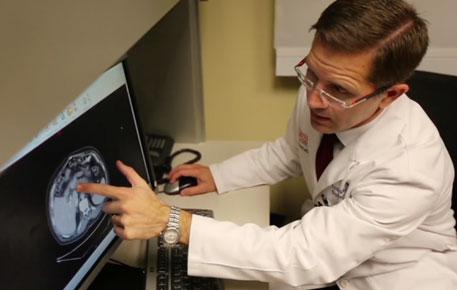
    With high-resolution CT, MRI, or endoscopic ultrasound, we use the only known effective screening technologies for detecting pancreatic cancer.

    Pancreatic Cancer Research

    The innovation continues. Our researchers are working on:

    • Developing a test to identify precancerous cells in the pancreas
    • Discovering a blood biomarker that shows the presence of pancreatic tumors over 90% of the time

    Find a Related Provider