Focused Ultrasound
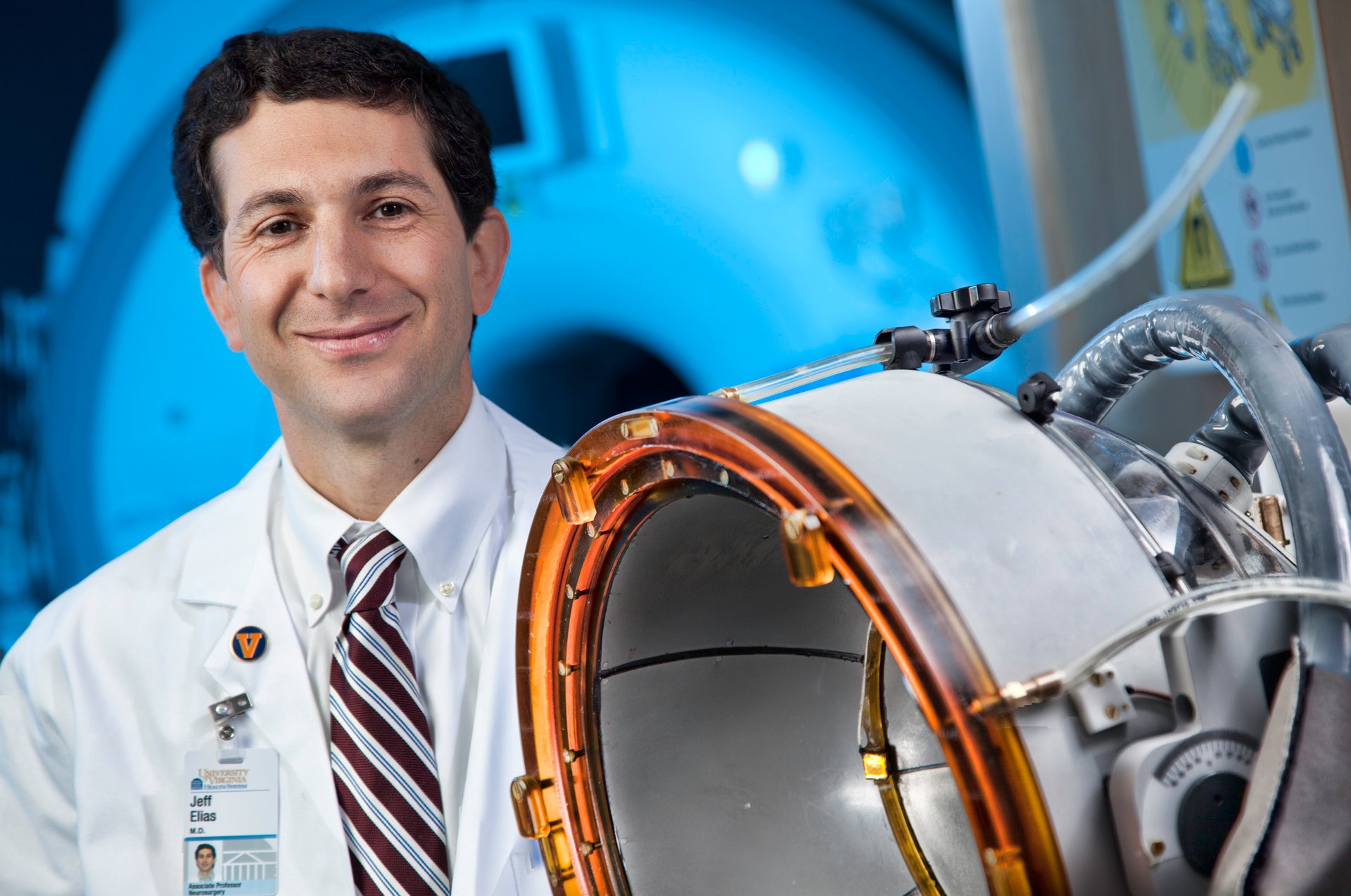
Focused ultrasound (FUS) uses concentrated sound waves to treat a precise area of the body without surgical incisions. Care teams use imaging to plan and guide treatment.
The treatment process, imaging, anesthesia, recovery, and possible risks depend on the type of focused ultrasound procedure.
Focused ultrasound is FDA-approved to treat a variety of conditions, including:
UVA Health offers clinical trials studying focused ultrasound for other conditions and as a way to improve drug delivery to the brain.
How Does Focused Ultrasound Work?
Focused ultrasound directs sound waves to a precise area of the body, much like a magnifying glass focuses light. Concentrating the waves in one spot allows doctors to treat the targeted area while limiting effects on nearby tissue.
Depending on the procedure, doctors can use focused ultrasound to:
- Heat and destroy targeted tissue
- Create tiny bubbles that mechanically break down tissue
- Temporarily open the blood-brain barrier so medicines can reach the brain more easily
What Happens During Focused Ultrasound?
Your procedure will depend on what we’re treating and the type of focused ultrasound we use. We may use MRI or ultrasound images to guide treatment.
You may stay awake, receive sedation, or have general anesthesia. The length of the procedure, recovery, and possible side effects also vary. Before treatment, we’ll explain what will happen and how focused ultrasound compares with your other options.
Is Focused Ultrasound Right for Me?
Focused ultrasound isn’t right for every person or every form of a condition. Your specialist will consider:
- Your diagnosis and symptoms
- The size and location of the treatment area
- Your health history
- Treatments you’ve already tried
- The imaging required for the procedure
- Your treatment needs and goals
We’ll explain whether focused ultrasound may be an option for you, along with its potential benefits, risks, and alternatives.
Why Choose UVA Health for Focused Ultrasound?
UVA Health pioneered focused ultrasound treatment for essential tremor. Research led by Jeff Elias, MD, included the world’s first use of focused ultrasound to treat a target inside the brain and helped lead to FDA approval of the treatment for essential tremor.
Today, our teams use focused ultrasound to treat several conditions. We also continue to investigate new uses for the technology through clinical trials.